
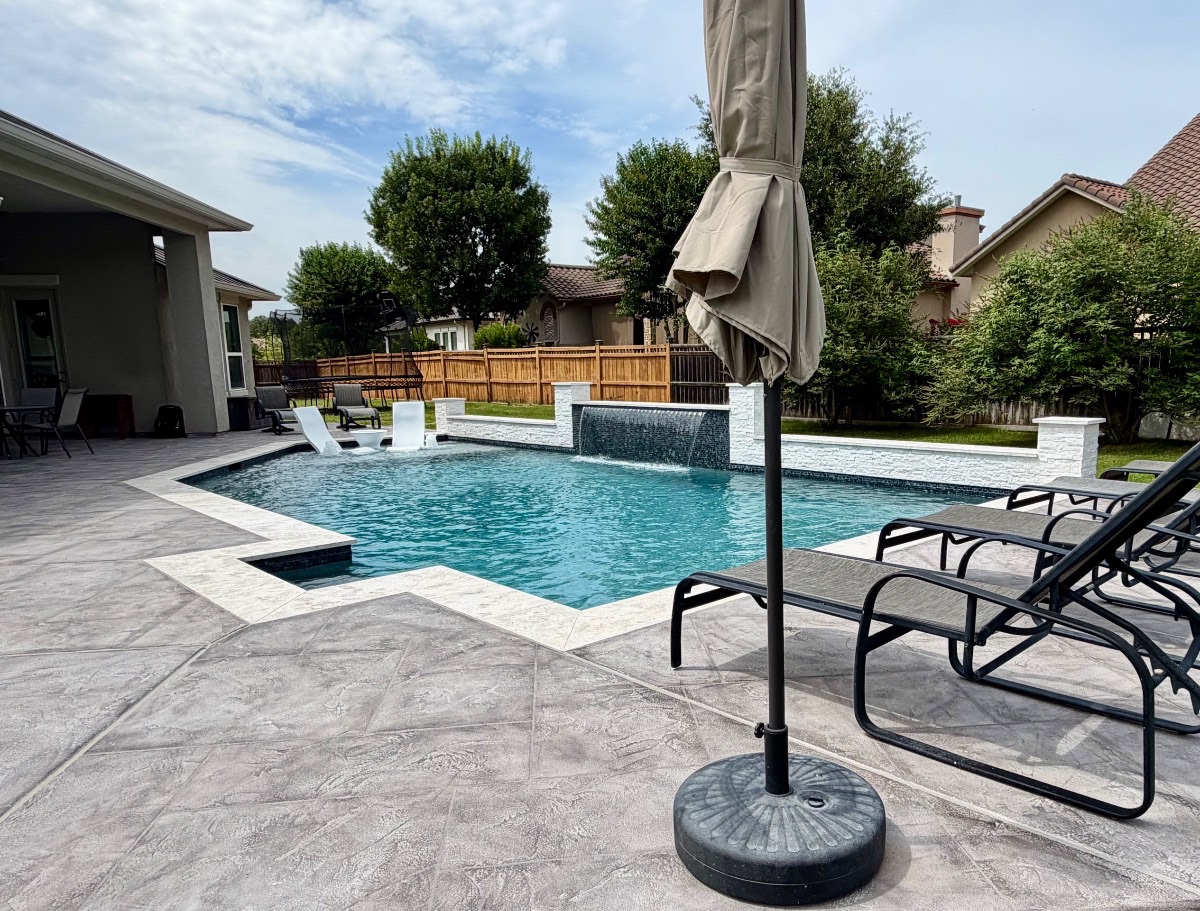
What does pool coping do?
Coping is the cap between the pool shell and the deck. It takes every hand, elbow, and heel that enters the water, sheds deck runoff away from the beam, and sets the visual line that your eye actually follows around the pool. When coping cracks, loosens, or lifts, water gets behind it — and behind it is the bond beam and the waterline tile.
Because we build gunite shells, we treat coping as structural trim rather than decoration. We look at why the old coping failed, whether the beam beneath it is sound, and how the deck drains before we set a single piece. Replacing coping properly in New Braunfels and San Antonio also means choosing stone that survives Hill Country sun and hard water: travertine, limestone, and precast all age differently here.
Coping replacement pairs naturally with resurfacing and new waterline tile — three jobs, one drain-down, one crew, one mobilization.

Full coping replacement
Remove failed coping, inspect and repair the bond beam, and set new stone with proper joints and slope.
Travertine & limestone
Bullnose travertine and Texas limestone in the profiles and colors that hold up to Hill Country sun.
Brick & precast coping
Brick and precast cantilever coping repaired or replaced to match existing decks and older builds.
Coping repair & re-set
Individual loose, cracked, or lifted pieces re-set and re-grouted where full replacement is not warranted.
Beam repair beneath
Spalled or cracked bond beam repaired before new coping goes on, which is where most coping jobs go wrong.
Tile & deck tie-in
New waterline tile and deck edge handled together so the finished line reads as one detail, not three repairs.
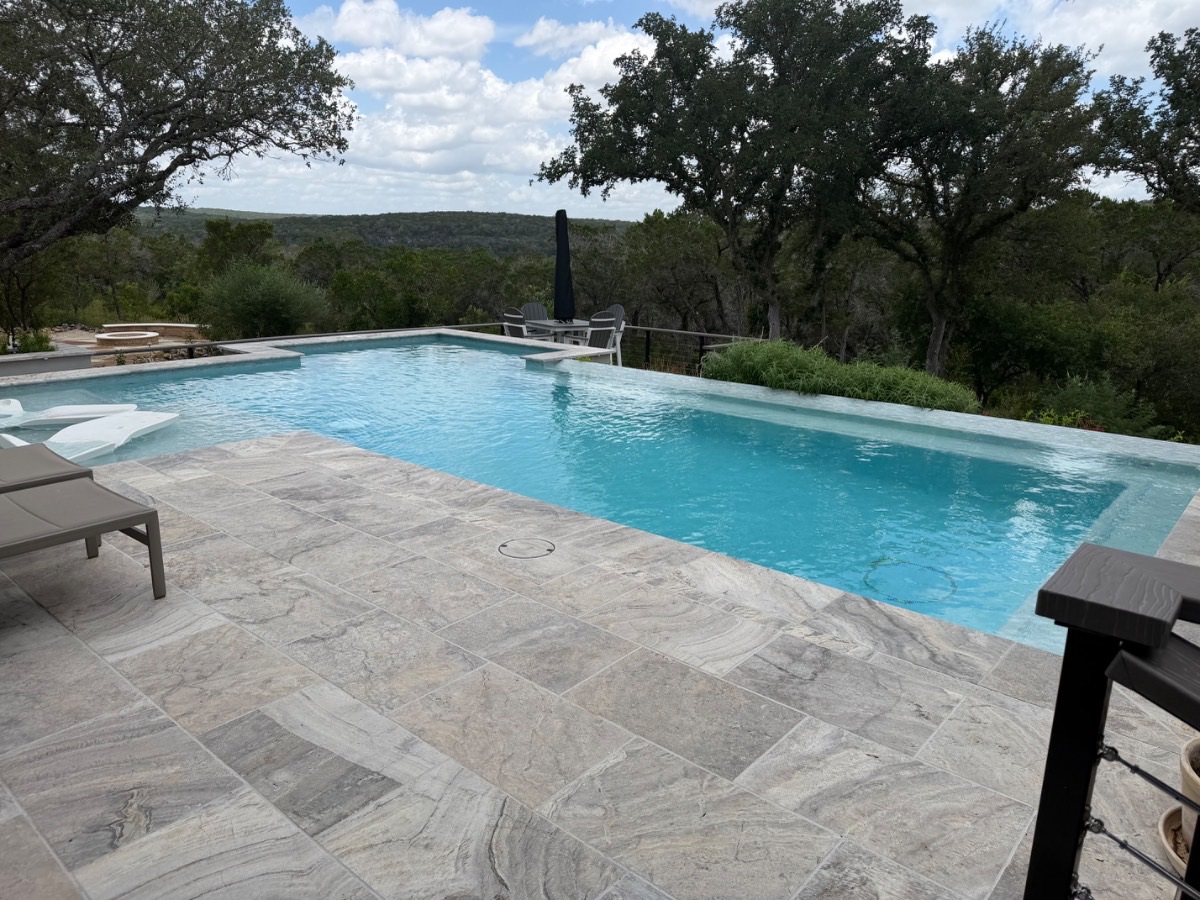
How do you know pool coping needs replacing?
Coping problems rarely stay cosmetic. Water behind a loose stone reaches the beam and the tile, and repairs get broader the longer they wait.
Loose or rocking stones
If a piece moves under weight, the mortar bed has failed and water is already getting behind it.
Open or missing joints
Blown expansion joints and washed-out grout let deck runoff into the beam. This is the most common cause of tile failure.
Cracked or spalling edges
Freeze cycles and hard water flake precast and brick over time. Chipped edges are also the most likely thing to cut a foot.
Water pooling toward the pool
Coping should shed water away from the shell. Deck runoff draining into the pool edge means the slope or the deck has moved.
How much does pool coping replacement cost?
Full coping replacement typically runs $5,000 to $14,000 depending on perimeter footage, the stone selected and how much bond beam repair is needed. Re-setting individual pieces is usually $800 to $3,000. Coping is quoted by perimeter footage, stone selection, and how much beam repair shows up once the old coping is off. These ranges are typical for pools in our market.
A true custom gunite pool with a clean geometric or freeform shape, PebbleTec finish, and essential equipment — engineered for your lot, not a stock template.
Our most popular range: a larger pool with a raised spa, water features, tanning ledge, LED lighting, and smart automation.
Coping and waterline tile with a new or resurfaced deck — the full perimeter rebuilt as one project.
Perimeter length, stone selection, and hidden beam damage move the number most. Combining coping with resurfacing lowers the cost of both.
How long does coping replacement take?
A typical residential perimeter takes about one to two weeks, including bond beam repair, grout and sealing. The old coping comes off, the beam underneath is inspected and repaired, and the new stone is set straight and sealed.
Assess
Walk the perimeter, sound out loose pieces, and check beam, tile, and deck drainage.
Remove
Old coping comes off cleanly without damaging the beam or the deck edge.
Repair & Set
Beam repaired where needed, then new stone set with even joints and slope away from the pool.
Grout & Seal
Joints grouted, expansion joints rebuilt, and stone sealed against hard water.
Questions we get asked.
What is pool coping and why does it fail?+
Coping is the capped edge between the pool shell and the deck. It fails when mortar beds break down, expansion joints open, or the bond beam beneath it cracks — usually from ground movement and deck runoff getting behind the stone.
How much does pool coping replacement cost?+
Full coping replacement typically runs $5,000 to $14,000 depending on perimeter footage, the stone selected, and how much bond beam repair is needed. Re-setting individual pieces is usually $800 to $3,000.
Can you replace coping without resurfacing the pool?+
Yes, though the waterline tile immediately below the coping usually has to come off with it, which is why most homeowners handle coping, tile, and interior together while the pool is already drained.
What is the best coping material for the Hill Country?+
Travertine is the most popular here — it stays cooler underfoot than concrete and handles our sun well. Texas limestone suits ranch and stone-clad homes, and precast cantilever is the most economical match for older builds and existing decks.
Do you repair coping on pools you did not build?+
Yes. Most of our coping work is on pools built by other companies, including precast and brick coping from builds twenty and thirty years old.
How long does coping replacement take?+
A typical residential perimeter takes about one to two weeks including beam repair, grout, and sealing. Scheduling it alongside resurfacing does not usually add time to the overall project.
The rest of the perimeter.
Resurfacing and replaster
Read →Pool decking and patios
Read →Crack and leak repair
Read →Pool renovation
Read →Serving New Braunfels, San Antonio, Boerne, Bulverde, Canyon Lake, Seguin and the surrounding Hill Country. See every neighborhood we build in.
Get your coping quoted.
Send a photo of the existing coping and we will tell you what is repairable and what needs replacing before we ever come out.
- —Google Guaranteed and BBB accredited, firefighter owned and family operated
- —PebbleTec Elite builder, with one local crew on your site from start to finish
- —We handle city and county permits and your HOA paperwork
Prefer to talk now? Call (830) 244‑7665 or text (830) 358‑2499.
Rebuild the edge.
A few photos of your coping and joints usually tell us whether this is a repair or a replacement.